Buckthorn Removal & Invasive Species Control in Southeast Wisconsin
Buckthorn, Honeysuckle, Garlic Mustard, Japanese Knotweed, Wild Parsnip, Barberry, Autumn Olive — if it’s on the Wisconsin DNR’s invasive list, we grind it down to mulch.
Based in Sheboygan County, we service all surrounding areas, including Plymouth, Kohler, Elkhart Lake, Cedarburg, Mequon, Port Washington, West Bend, Hartford, Saukville, Appleton, Oshkosh, Fox Valley, Fond du Lac, Manitowoc, Green Bay, and the greater Milwaukee areas.
**LICENSED - INSURED - OWNER OPERATED**

This is what we’re fighting
If your land look like this, we should talk.
Mature buckthorn forms dense, impenetrable thickets that shade out every native plant beneath them and harbor higher tick populations than the surrounding forest. Once it takes hold, hand removal becomes a slow and painful task.
See It In Action
This Is What Happens to Your Buckthorn
One pass through a thicket that took years to establish. Watch the ASV and mulcher head do in minutes what would take a hand crew all season — then the whole mess becomes mulch.

Wisconsin’s Worst Offenders — And How We Handle Each One
Every Wisconsin landowner is fighting at least one of these.
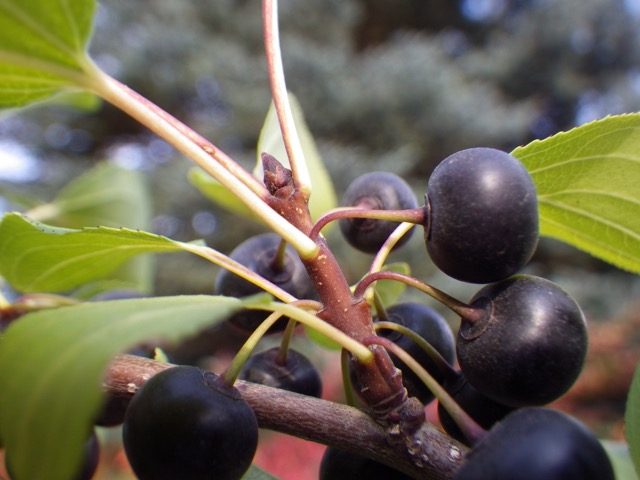
Common & Glossy Buckthorn
Rhamnus cathartica & Frangula alnus — the #1 invasive in Wisconsin. DNR-restricted, illegal to plant or transport. Shades out the entire understory and harbors deer ticks.
How we kill it: Forestry mulching for dense stands - overly large stumps and root systems can be dug up with the grapple bucket. Plan for a follow-up with your lawn mower the next season — buckthorn re-sprouts aggressively. It will take 2 to 3 years before it's eradicated. But after we do the "heavy lifting" in year 1 - you can likely handle the follow up cuttings on your own.
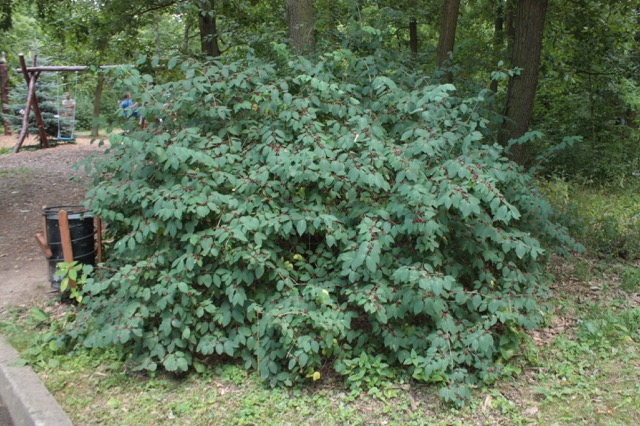
Honeysuckle
Tartarian, Morrow’s, and Amur honeysuckle — the sister problem to buckthorn. Forms dense thickets along woodland edges and fence lines.
How we kill it: Mulched in place. Often paired with buckthorn removal. Grapple Bucket can be used to uproot larger plants.
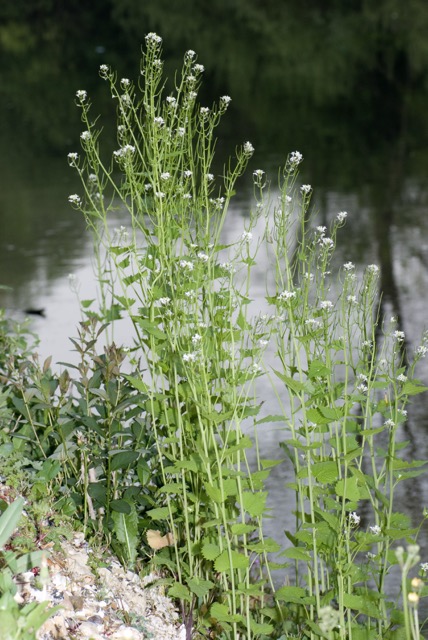
Garlic Mustard
Biennial herb that produces hundreds of seeds per plant. Peaks in May and June. Spreads on deer fur, in mulch, and by foot traffic.
How we kill it: Forestry Mulcher. Multi-year campaign needed because the seed bank lasts 5+ years.
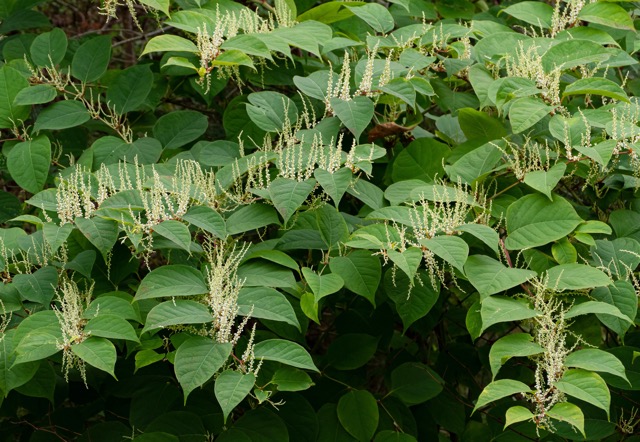
Japanese Knotweed
The bamboo-looking thug. Roots break concrete and foundations. Nearly impossible to kill without persistent treatment.
How we kill it: Repeated cutting. Multi-year program. Don’t try to dig it out — fragments re-sprout.
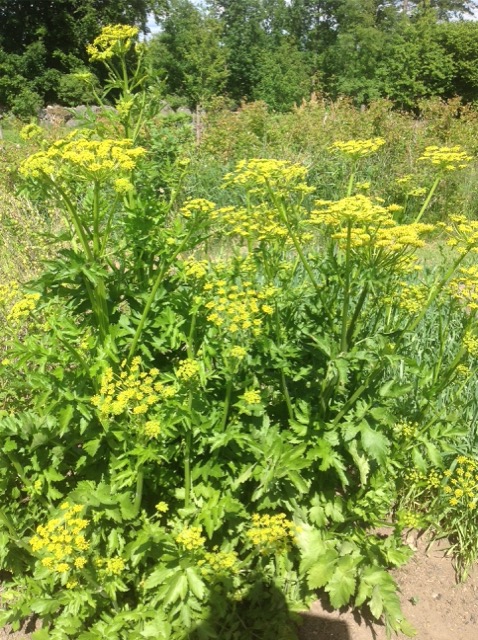
Wild Parsnip
Yellow umbel that grows along roads and in old fields. Sap causes severe skin burns when exposed to sunlight — a real summer hazard.
How we kill it: Cut before flowering. We bring proper PPE — don’t handle it yourself.
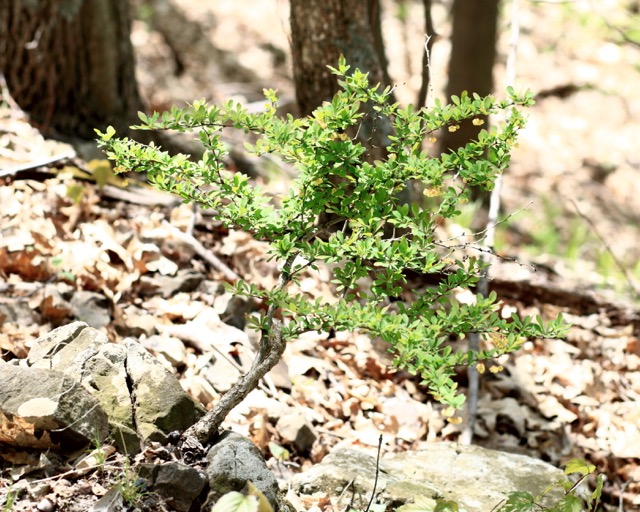
Japanese Barberry
Spiny landscape shrub that’s escaped into Wisconsin woods. Documented to harbor higher tick populations than native shrubs.
How we kill it: Mulched in place.
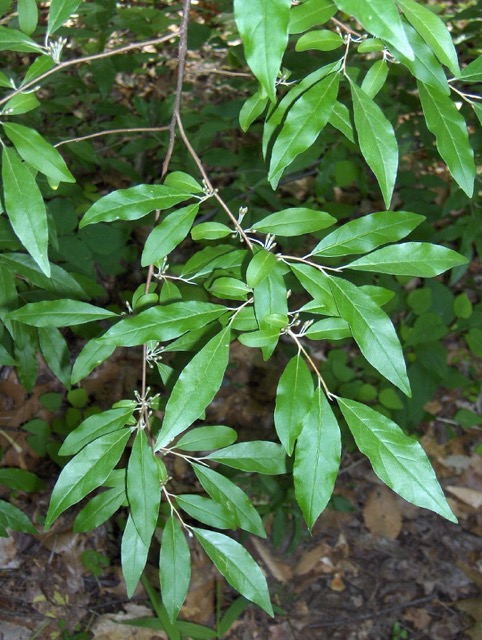
Autumn Olive
Silver-leaved shrub with red berries. DNR-restricted. Birds spread the seeds widely.
How we kill it: Forestry mulching for stands. This stuff can take over quickly - large stands are ground into mulch with our powerful High Flow Mulcher.
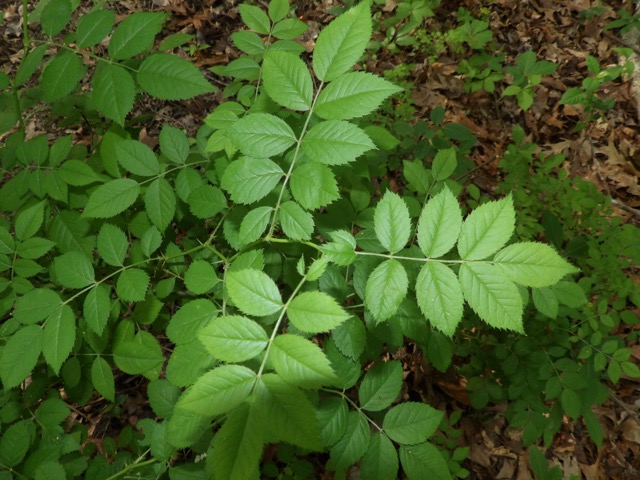
Multiflora Rose, Black Locust & More
Pasture invaders, restricted suckering trees, reed canary grass in wet areas — we tackle the full Wisconsin terrestrial invasive list.
How we kill it: Forestry Mulcher. Quoted after we walk the property.
Why Most DIY Buckthorn Removal Fail
You Give Up Too Soon
Removing buckthorn by hand is miserable. Most people start off very determined but then lose momentum every time a thorn cuts their skin or tears their clothes.
See how much work you can do with a chainsaw and other power tools in a day, then hire us. We'll do more work in the first hour - and provide a better result.
The Seed Bank Is 5–7 Years Deep
Mature plants have been dropping berries for years. Even if you kill every adult, new seedlings will keep coming up.
Brush Piles Become Habitat
Cut buckthorn left in piles becomes deer-tick paradise. Grinding into mulch actually provides-for and protects the soil.
Our process: Mechanical removal with the forestry mulcher - this process turns once impassable thickets into wide open and enjoyable land. After our initial mulching project, you'll be able to manage the the re-sprouts with a standard lawn mower or weed-wacker. Or, have us back again the following season to be sure the re-sprouts are taken down properly.
Ready to Take Back Your Land?
Free on-site quote. We answer the phone — talk to Chris directly.
Call 920-550-1102
— or —
Get a Free On-Site Quote
What Does Buckthorn Removal Cost?
Honest ranges based on real Wisconsin jobs.
We always quote per-property after a free site visit.
Small Backyard Patch
Less than 1/4 acre.
1/4 to 1 Acre
Mulched in place with the tracked mulcher. Most common job we run for SE Wisconsin Land Owners.
Multi-Acre Woodland Restoration
Forestry mulching at scale. Quoted after walking the property and assessing density.
Compare to hand-removal contractors charging $40–$60/hour per person ($80–$120/hour for a 2-person crew). In 1-hour we will accomplish more work than a 2 man labor crew will do all day.
And... With far better looking results.
Buckthorn FAQ — What Wisconsin Landowners Ask Most
How much does buckthorn removal cost in Wisconsin?
Small backyard jobs run $500–$800. Quarter to one acre dense stands typically run $1,500–$3,500. Multi-acre woodland restoration is $1,500–$3,000 per acre. We quote every job after a free on-site walk.
When is the best time to remove buckthorn?
October through April is ideal, but anytime year-round is effective — buckthorn keeps its leaves longer than native plants, so it’s easy to spot, and the frozen ground reduces equipment impact.
Will buckthorn grow back after I cut it?
Yes — every time. Cut buckthorn re-sprouts with multiple stems unless the stump is treated with herbicide or repeatedly re-cut over several seasons. We don't use chemicals to treat the stumps - but after we're gone - it's easy for the land-owner to apply the correct herbicide.
Can I remove buckthorn myself?
For small plants under an inch in diameter, yes — a weed wrench works. For mature stands, hand removal is months of work and almost always re-sprouts. A tracked mulcher handles in one day what would take a homeowner an entire season.
Do I have to remove buckthorn from my property?
The Wisconsin DNR classifies buckthorn as restricted (illegal to plant, sell, or transport) but doesn’t require removal of existing plants. That said, your property value and woodland health drop significantly when buckthorn takes over. Some Wisconsin municipalities are starting to require removal.
What grows back after the buckthorn is gone?
Native understory plants — wildflowers, ferns, oak and maple seedlings — finally get sunlight and start returning. We can recommend native seed mixes or plantings to speed up restoration and crowd out new buckthorn seedlings.
Get Buckthorn Off Your Land for Good
Free on-site quote. We answer the phone — talk to Chris directly.
Call 920-550-1102— or send us a message —

.png)